
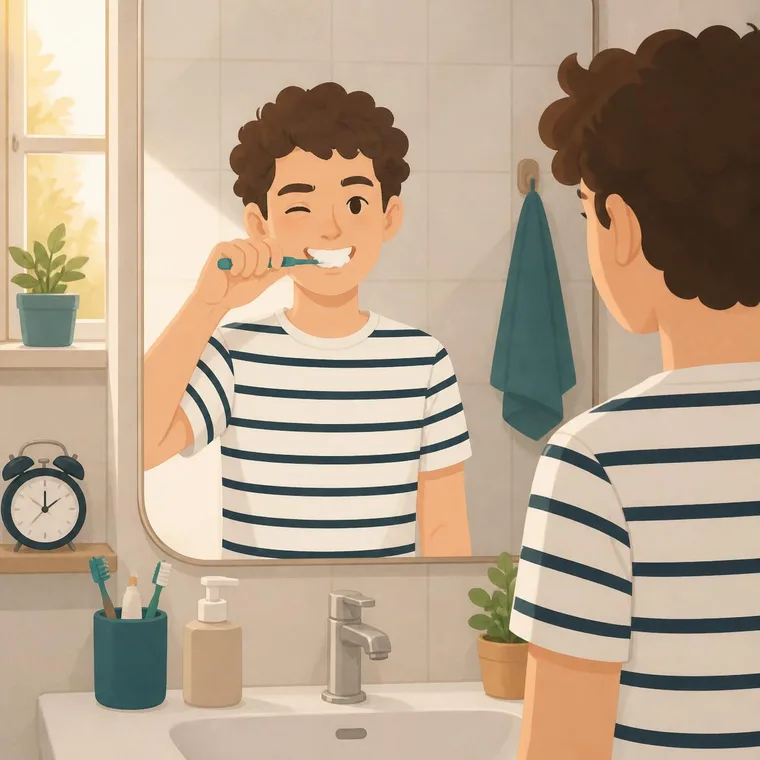
Reflexive verbs (mi chiamo, mi alzo…)
⏱️ In 10 seconds
- The infinitive ends in -arsi, -ersi, -irsi: alzarsi, mettersi, vestirsi.
- A pronoun goes before the verb: mi, ti, si, ci, vi, si. Mi alzo, ti alzi, si alza…
- The action goes back to the person doing it: lavo la macchina (I wash the car) · mi lavo (I wash myself).
1The rule
Reflexive pronoun + verb in the present. The verb is conjugated like any regular verb: lavarsi → (io) mi lavo, just like lavo.
The present tense of reflexive verbs
| -arsilavarsi | -ersimettersi | -irsivestirsi | |
|---|---|---|---|
| io | mi lavo | mi metto | mi vesto |
| tu | ti lavi | ti metti | ti vesti |
| lui / lei | si lava | si mette | si veste |
| noi | ci laviamo | ci mettiamo | ci vestiamo |
| voi | vi lavate | vi mettete | vi vestite |
| loro | si lavano | si mettono | si vestono |
-arsi lavarsi
- io
- mi lavo
- tu
- ti lavi
- lui / lei
- si lava
- noi
- ci laviamo
- voi
- vi lavate
- loro
- si lavano
-ersi mettersi
- io
- mi metto
- tu
- ti metti
- lui / lei
- si mette
- noi
- ci mettiamo
- voi
- vi mettete
- loro
- si mettono
-irsi vestirsi
- io
- mi vesto
- tu
- ti vesti
- lui / lei
- si veste
- noi
- ci vestiamo
- voi
- vi vestite
- loro
- si vestono
- The coloured part is the pronoun; the verb has the normal present-tense endings (lavo, metto, vesto).
- lui / lei and loro share the same pronoun: si. So does polite Lei: Come si chiama? (What’s your name?)
- mettersi = to put on (clothes): Mi metto la giacca. (I put my jacket on.)
Common reflexive verbs
- chiamarsimi chiamo
- svegliarsimi sveglio
- alzarsimi alzo
- farsi la docciami faccio la doccia
- lavarsi i dentimi lavo i denti
- pettinarsimi pettino
- truccarsimi trucco
- riposarsimi riposo
- divertirsimi diverto
- sentirsimi sento
- addormentarsimi addormento
- trovarsi benemi trovo bene
- 1. The pronoun goes before the verb, and non goes before the pronoun: Mi alzo alle sette. (I get up at seven.) Non mi alzo mai tardi. (I never get up late.)
- 2. With dovere, potere, volere + infinitive there are two positions, with the same meaning: Mi devo alzare = Devo alzarmi (I have to get up). In the second one the pronoun is attached to the infinitive, which drops its final -e (alzare → alzarmi). The pronoun changes with the person: devi alzarti, dobbiamo alzarci. You never say devo alzarsi.
- 3. Reflexive or not? Many verbs have both forms: Sveglio i bambini (I wake the children up) · Mi sveglio (I wake up). Chiamo Marco (I call Marco on the phone) · Mi chiamo Marco (My name is Marco).
- 4. Body parts and clothes: with reflexive verbs Italian uses the article, not the possessive: Mi lavo le mani. (I wash my hands.) Mi metto il cappotto. (I put my coat on.) Not lavo le mie mani.
- 5. Reciprocal use: in the plural, ci, vi, si can mean “each other”: Ci vediamo domani! (See you tomorrow! – literally “we see each other”) · Luca e Giulia si scrivono ogni giorno. (Luca and Giulia write to each other every day.) · Vi conoscete? (Do you know each other?)
- 6. In the passato prossimo reflexive verbs always take essere, and the participle agrees with the subject: Marco si è alzato tardi. Giulia si è alzata tardi. (Marco / Giulia got up late.) Ci siamo divertiti. (We had fun.)
2⚠️ Watch out
To say your name you need the pronoun: mi chiamo.
Io chiamo Kenji.
Io mi chiamo Kenji.
The pronoun changes with the person: noi → ci.
Noi si alziamo presto.
Noi ci alziamo presto.
The pronoun attached to the infinitive changes too: io → -mi.
Domani devo alzarsi presto.
Domani devo alzarmi presto.
non goes before the pronoun.
Mi non sveglio mai presto.
Non mi sveglio mai presto.
3Examples
Ogni mattina mi sveglio alle sette, ma mi alzo alle sette e mezza.
Every morning I wake up at seven, but I get up at half past seven.毎朝7時に目が覚めますが、起きるのは7時半です。Giulia si fa la doccia e poi si veste.
Giulia has a shower and then gets dressed.ジュリアはシャワーを浴びてから服を着ます。Dopo colazione Matteo si lava i denti.
After breakfast Matteo brushes his teeth.朝食のあと、マッテオは歯をみがきます。Domani devo alzarmi presto: ho un esame.
Tomorrow I have to get up early: I have an exam.明日は早く起きなければなりません。試験があるんです。Al mare i bambini si divertono sempre.
Children always have fun at the seaside.海では子どもたちはいつも楽しそうに遊びます。Allora ci vediamo domani alle otto!
So, see you tomorrow at eight!じゃあ、明日8時にね!4Exercises
Type or tap your answer, then press “Check”. Correct answers turn green.
1. Complete with the reflexive verb
Write the verb in brackets in the present, with the right pronoun.
- Io (chiamarsi) Aya. E tu?My name is Aya. And you?私の名前はアヤです。あなたは?
- Tu a che ora (alzarsi) la mattina?What time do you get up in the morning?朝は何時に起きる?
- Mio padre (farsi) la barba ogni mattina.My father shaves every morning.父は毎朝ひげをそります。
- Noi (vestirsi) in fretta perché siamo in ritardo.We get dressed in a hurry because we’re late.遅れているので、私たちは急いで服を着ます。
- Voi (divertirsi) a scuola?Do you have fun at school?あなたたちは学校で楽しく過ごしていますか?
- I bambini (lavarsi) le mani prima di mangiare.The children wash their hands before eating.子どもたちは食べる前に手を洗います。
- Fa freddo, così io (mettersi) il cappotto.It’s cold, so I put my coat on.寒いので、コートを着ます。
- Giulia non (truccarsi) mai.Giulia never wears make-up.ジュリアはお化粧をしません。
- La domenica Kenji e Aya (riposarsi) tutto il giorno.On Sundays Kenji and Aya rest all day.日曜日、ケンジとアヤは一日中休みます。
- Domani devo (alzarsi) alle sei.Tomorrow I have to get up at six.明日は6時に起きなければなりません。
2. Choose the right form
Tap the right form.
- Come tuo fratello? What’s your brother’s name?お兄さんの名前は?
- Noi alle otto. We get up at eight.私たちは8時に起きます。
- Tu presto la domenica? Do you wake up early on Sundays?日曜日も早く目が覚める?
- Voi alle feste? Do you have fun at parties?あなたたちはパーティーで楽しんでいますか?
- Il bambino ha sonno e subito. The child is sleepy and falls asleep straight away.その子は眠くて、すぐに寝てしまいます。
- Ogni mattina io i denti. Every morning I brush my teeth.毎朝、歯をみがきます。
- Domani dobbiamo presto. Tomorrow we have to get up early.明日、私たちは早く起きなければなりません。
- Marco e Giulia ogni sabato. Marco and Giulia see each other every Saturday.マルコとジュリアは毎週土曜日に会っています。
- Io non mai la cravatta. I never wear a tie.私はネクタイをしません。
- La domenica presto. On Sundays I don’t wake up early.日曜日は早く目が覚めません。
3. Who is the subject?
Match the subject to the right form of the verb.
4. Find the mistake
If there’s a mistake, tap the wrong word and write the correct one. If the sentence is correct, tap “✓ It’s correct”.
- In the evening I rest on the sofa.夜はソファでくつろぎます。
- Tomorrow I have to wake up early.明日は早く起きなければなりません。
- Nice to meet you, my name is Matteo.はじめまして、マッテオです。
- Luca and Giulia talk on the phone every day.ルカとジュリアは毎日電話で話しています。
- I never get up before eight.8時より前に起きることはありません。
- My friends are having a great time in Italy.友だちはイタリアでとても楽しんでいます。
- Shall we meet tonight?今晩会う?
- What time do you get up in the morning?朝は何時に起きる?
5. Put in order
Tap the words in the right order.
- . I wake up at seven.7時に目が覚めます。
- ? What’s your sister’s name?お姉さんの名前は?
- . Tomorrow I have to get up early.明日は早く起きなければなりません。
- . See you tomorrow at school.また明日、学校で。
5Frequently asked questions
And in the past? “Mi sono alzato” or “mi ho alzato”?
- Luca si è svegliato tardi. (Luca woke up late.)
- Aya si è svegliata tardi. (Aya woke up late.)
- Le ragazze si sono divertite. (The girls had fun.)
Why do you say “mi lavo i denti” and not “lavo i miei denti”?
- Mi lavo le mani. (I wash my hands.)
- Ti metti la giacca? (Are you putting your jacket on?)
- Giulia si pettina i capelli. (Giulia combs her hair.)
How is the verb conjugated after the pronoun?
More grammar pages
-
 A1–A2Possessive adjectives
il mio, la tua, i suoi… and why you say “mia madre” without an article.
-
 A1–A2The passato prossimo
Ho mangiato or sono andato? Essere or avere and irregular participles.
-
 A2Direct object pronouns (lo, la, li, le)
lo, la, li, le: where they go, l’ho visto / l’ho vista, voglio comprarlo.
-
 A2The imperfetto (past habits and descriptions)
Da bambino giocavo, faceva freddo, ero stanco: forms and uses.