
The imperfetto
⏱️ In 10 seconds
- Drop -re from the infinitive and add -vo, -vi, -va, -vamo, -vate, -vano: parlavo, prendevo, dormivo.
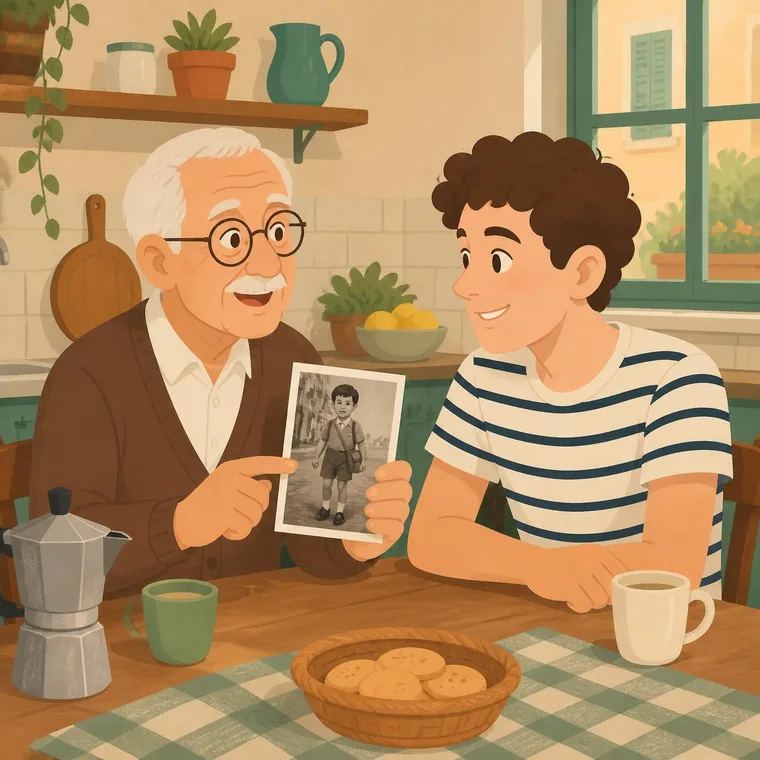
- It tells how things were: habits (da bambino giocavo), descriptions (faceva freddo), actions in progress (mentre mangiavo…).
- Few irregular verbs: essere (ero), fare (facevo), bere (bevevo), dire (dicevo).
1The rule
Infinitive without -re + -vo, -vi, -va, -vamo, -vate, -vano. The endings are the same for all three groups.
Regular verbs
| -areparlare | -ereprendere | -iredormire | |
|---|---|---|---|
| io | parlavo | prendevo | dormivo |
| tu | parlavi | prendevi | dormivi |
| lui / lei | parlava | prendeva | dormiva |
| noi | parlavamo | prendevamo | dormivamo |
| voi | parlavate | prendevate | dormivate |
| loro | parlavano | prendevano | dormivano |
-are parlare
- io
- parlavo
- tu
- parlavi
- lui / lei
- parlava
- noi
- parlavamo
- voi
- parlavate
- loro
- parlavano
-ere prendere
- io
- prendevo
- tu
- prendevi
- lui / lei
- prendeva
- noi
- prendevamo
- voi
- prendevate
- loro
- prendevano
-ire dormire
- io
- dormivo
- tu
- dormivi
- lui / lei
- dormiva
- noi
- dormivamo
- voi
- dormivate
- loro
- dormivano
Irregular verbs
| essereto be | fareto do / make | bereto drink | direto say | |
|---|---|---|---|---|
| io | ero | facevo | bevevo | dicevo |
| tu | eri | facevi | bevevi | dicevi |
| lui / lei | era | faceva | beveva | diceva |
| noi | eravamo | facevamo | bevevamo | dicevamo |
| voi | eravate | facevate | bevevate | dicevate |
| loro | erano | facevano | bevevano | dicevano |
essere to be
- io
- ero
- tu
- eri
- lui / lei
- era
- noi
- eravamo
- voi
- eravate
- loro
- erano
fare to do / make
- io
- facevo
- tu
- facevi
- lui / lei
- faceva
- noi
- facevamo
- voi
- facevate
- loro
- facevano
bere to drink
- io
- bevevo
- tu
- bevevi
- lui / lei
- beveva
- noi
- bevevamo
- voi
- bevevate
- loro
- bevevano
dire to say
- io
- dicevo
- tu
- dicevi
- lui / lei
- diceva
- noi
- dicevamo
- voi
- dicevate
- loro
- dicevano
- 1. Past habits – things you used to do: Da bambino andavo al mare ogni estate. (As a child I used to go to the seaside every summer.) Typical words: sempre, di solito, spesso, ogni giorno, da piccolo.
- 2. Descriptions – weather, time, age, appearance, feelings: Faceva freddo. Erano le otto. Avevo vent’anni. Ero stanco. (It was cold. It was eight o’clock. I was twenty. I was tired.)
- 3. Actions in progress – something that was going on, often with mentre (while): Mentre cucinavo, ascoltavo la radio. (While I was cooking, I was listening to the radio.)
- 4. Polite requests – at the bar or in a shop: Volevo un caffè, per favore. (I’d like a coffee, please.) It’s more polite than voglio.
2⚠️ Watch out
A habit (every summer) needs the imperfetto.
Da bambino ogni estate sono andato al mare.
Da bambino ogni estate andavo al mare.
essere is irregular: ero, eri, era…
Ieri sera eravo stanco.
Ieri sera ero stanco.
fare uses the stem face-.
Cosa favi ieri alle otto?
Cosa facevi ieri alle otto?
Age is a description: imperfetto.
Quando ho avuto dieci anni, abitavo a Osaka.
Quando avevo dieci anni, abitavo a Osaka.
3Examples
Da piccola abitavo in campagna e avevo un cane.
As a little girl I lived in the countryside and had a dog.小さいころ、田舎に住んでいて犬を飼っていました。Il sabato mio padre preparava sempre la pizza.
On Saturdays my father always made pizza.土曜日は、父がいつもピザを作っていました。Era una bella giornata e non c’era nessuno in spiaggia.
It was a beautiful day and there was nobody on the beach.いい天気で、ビーチには誰もいませんでした。Mentre Aya leggeva, Kenji dormiva sul divano.
While Aya was reading, Kenji was sleeping on the sofa.アヤが本を読んでいる間、ケンジはソファで寝ていました。Il nonno diceva sempre: «Chi va piano, va sano e va lontano.»
Grandpa always used to say: “Slow and steady goes far.”祖父はいつも「急がば回れ」と言っていました。Buongiorno, volevo due biglietti per Firenze.
Good morning, I’d like two tickets to Florence.こんにちは、フィレンツェ行きの切符を2枚お願いしたいのですが。4Exercises
Type or tap your answer, then press “Check”. Correct answers turn green.
1. Complete with the imperfetto
Write the verb in brackets in the imperfetto.
- Da bambino io (giocare) a calcio tutti i pomeriggi.As a child I played football every afternoon.子どものころ、毎日午後にサッカーをしていました。
- Mia nonna (abitare) in una piccola casa vicino al mare.My grandmother lived in a small house near the sea.祖母は海の近くの小さな家に住んでいました。
- Quando eravate piccoli, (guardare) i cartoni animati?When you were little, did you watch cartoons?小さいころ、アニメを見ていましたか?(あなたたち)
- Noi (prendere) sempre l’autobus delle otto.We always took the eight o’clock bus.私たちはいつも8時のバスに乗っていました。
- Ieri (fare) molto caldo.Yesterday it was very hot.昨日はとても暑かったです。
- Tu (essere) a casa ieri sera?Were you at home last night?昨夜は家にいた?
- I miei genitori (dormire) quando sono tornato.My parents were sleeping when I came back.私が帰ったとき、両親は寝ていました。
- Da giovane mio padre (bere) tre caffè al giorno.When he was young, my father drank three coffees a day.若いころ、父は1日に3杯コーヒーを飲んでいました。
- Mentre Giulia (finire) i compiti, io preparavo la cena.While Giulia was finishing her homework, I was making dinner.ジュリアが宿題を終えようとしている間、私は夕食を作っていました。
- Gli studenti non (dire) niente: erano timidi.The students didn’t say anything: they were shy.学生たちは何も言いませんでした。恥ずかしがっていたのです。
2. Choose the right form
Tap the correct imperfetto form.
- Quando piccola, avevo paura del buio. When I was little, I was afraid of the dark.小さいころ、暗いのがこわかったです。
- Che cosa voi ieri alle sei? What were you doing yesterday at six?昨日の6時、あなたたちは何をしていましたか?
- Marco e Luca nella stessa classe. Marco and Luca were in the same class.マルコとルカは同じクラスでした。
- La sera noi sempre un tè caldo. In the evening we always drank a hot tea.夜、私たちはいつも温かいお茶を飲んでいました。
- Da ragazzo Kenji il pianoforte. As a boy, Kenji played the piano.少年のころ、ケンジはピアノを弾いていました。
- Tu non bene la lezione e chiedevi sempre aiuto. You didn’t understand the lesson well and always asked for help.あなたは授業がよくわからず、いつも助けを求めていました。
- Buongiorno, un cornetto alla crema, per favore. Good morning, I’d like a custard croissant, please.こんにちは、クリームのコルネットをお願いしたいのですが。
- Mia madre mi sempre di mangiare la verdura. My mother always told me to eat my vegetables.母はいつも野菜を食べなさいと言っていました。
3. Infinitive and imperfetto
Match the infinitive to the io form.
4. Find the mistake
If there’s a mistake, tap the wrong word and write the correct one. If the sentence is correct, tap “✓ It’s correct”.
- My father always told the truth.父はいつも本当のことを言っていました。
- While you were sleeping, I was studying.あなたが寝ている間、私は勉強していました。
- When I was little, I lived in Naples.小さいころ、ナポリに住んでいました。
- It was late and there was nobody in the street.遅い時間で、通りには誰もいませんでした。
- My grandparents had a small restaurant.祖父母は小さなレストランを営んでいました。
- As children we drank a lot of milk.子どものころ、私たちは牛乳をたくさん飲んでいました。
- Yesterday it was cold and raining.昨日は寒くて雨が降っていました。
- We always went to the mountains in August.私たちは8月にいつも山へ行っていました。
5. Put in order
Tap the words in the right order.
- . As a child I always played in the garden.子どものころ、いつも庭で遊んでいました。
- . It was cold and it was snowing.寒くて雪が降っていました。
- . While I was cooking, I was listening to the radio.料理しながらラジオを聞いていました。
- . Good morning, I’d like a coffee.こんにちは、コーヒーをお願いしたいのですが。
5Frequently asked questions
Imperfetto or passato prossimo?
How do you translate the imperfetto into English?
Why do Italians say “volevo” and not “voglio” at the bar?
More grammar pages
-
 A2Passato prossimo or imperfetto?
Ho visto or vedevo? The background and the event, with mentre and all’improvviso.
-
 A2The simple future (parlerò, andrò…)
parlerò, andrò, sarò: the forms, the irregular verbs and the future for guesses.
-
 A2The present conditional (vorrei, potresti…)
vorrei, potrebbe, dovresti: polite requests, wishes and advice.
-
 A2Comparatives (più… di, meglio, migliore)
più alto di or più alto che? Migliore or meglio? And the superlative.