
The present conditional
⏱️ In 10 seconds
- It is formed like the future, but with the endings -rei, -resti, -rebbe, -remmo, -reste, -rebbero: parlerei, prenderei, dormirei.
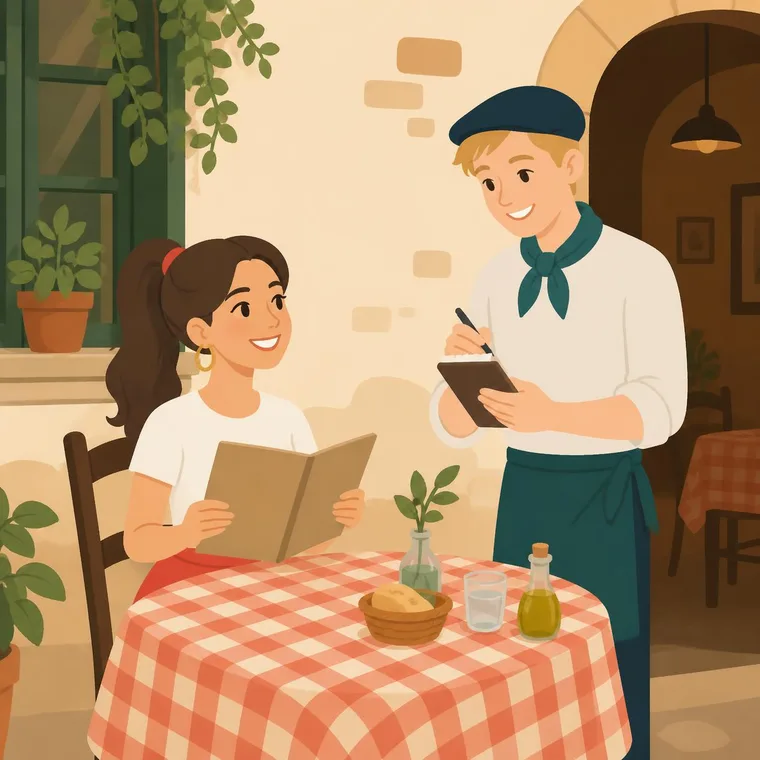
- It is used to be polite (vorrei un caffè), to express wishes (mi piacerebbe…) and to give advice (dovresti…).
- Watch out for noi: parleremmo (conditional, double m) ≠ parleremo (future, single m).
1The rule
Infinitive without the final -e (in -are verbs the a becomes e: parlar- → parler-) + -ei, -esti, -ebbe, -emmo, -este, -ebbero. It is the same stem as the future: parlerò → parlerei.
Regular verbs
| -areparlare | -ereprendere | -iredormire | |
|---|---|---|---|
| io | parlerei | prenderei | dormirei |
| tu | parleresti | prenderesti | dormiresti |
| lui / lei | parlerebbe | prenderebbe | dormirebbe |
| noi | parleremmo | prenderemmo | dormiremmo |
| voi | parlereste | prendereste | dormireste |
| loro | parlerebbero | prenderebbero | dormirebbero |
-are parlare
- io
- parlerei
- tu
- parleresti
- lui / lei
- parlerebbe
- noi
- parleremmo
- voi
- parlereste
- loro
- parlerebbero
-ere prendere
- io
- prenderei
- tu
- prenderesti
- lui / lei
- prenderebbe
- noi
- prenderemmo
- voi
- prendereste
- loro
- prenderebbero
-ire dormire
- io
- dormirei
- tu
- dormiresti
- lui / lei
- dormirebbe
- noi
- dormiremmo
- voi
- dormireste
- loro
- dormirebbero
Most common irregular verbs
| essereto be | avereto have | volereto want | poterecan | |
|---|---|---|---|---|
| io | sarei | avrei | vorrei | potrei |
| tu | saresti | avresti | vorresti | potresti |
| lui / lei | sarebbe | avrebbe | vorrebbe | potrebbe |
| noi | saremmo | avremmo | vorremmo | potremmo |
| voi | sareste | avreste | vorreste | potreste |
| loro | sarebbero | avrebbero | vorrebbero | potrebbero |
essere to be
- io
- sarei
- tu
- saresti
- lui / lei
- sarebbe
- noi
- saremmo
- voi
- sareste
- loro
- sarebbero
avere to have
- io
- avrei
- tu
- avresti
- lui / lei
- avrebbe
- noi
- avremmo
- voi
- avreste
- loro
- avrebbero
volere to want
- io
- vorrei
- tu
- vorresti
- lui / lei
- vorrebbe
- noi
- vorremmo
- voi
- vorreste
- loro
- vorrebbero
potere can
- io
- potrei
- tu
- potresti
- lui / lei
- potrebbe
- noi
- potremmo
- voi
- potreste
- loro
- potrebbero
Other irregular verbs (io form)
- andareandrei
- farefarei
- starestarei
- daredarei
- venireverrei
- doveredovrei
- saperesaprei
- vederevedrei
- viverevivrei
- bereberrei
- rimanererimarrei
- tenereterrei
- 1. Polite requests – at the bar, in a shop, with people you don’t know: Vorrei un caffè, per favore. Scusi, potrebbe aiutarmi? Mi daresti una mano? (I’d like a coffee, please. Excuse me, could you help me? Would you give me a hand?) It’s more polite than the present (voglio, può, dai).
- 2. Wishes – things you would like to do: Mi piacerebbe vivere in Italia. Andrei volentieri al mare. (I’d like to live in Italy. I’d gladly go to the seaside.) With a plural thing: Mi piacerebbero due gatti. (I’d like two cats.)
- 3. Advice – with dovere or with al tuo posto (= if I were you): Sei stanco: dovresti riposare. Al tuo posto prenderei il treno. (You’re tired: you should rest. If I were you, I’d take the train.) Also: Faresti meglio a partire presto. (You’d better leave early.)
- 4. Unconfirmed news – in newspapers and on TV, to say that information is not confirmed: Secondo la polizia, il ladro sarebbe un ragazzo di vent’anni. (According to the police, the thief is allegedly a twenty-year-old.) It is also used for hypotheses: Con più tempo, studierei il giapponese. (With more time, I would study Japanese.)
- 5. Conditional or future? The forms look very similar. Remember: future parlerò, parleremo (sure facts: Domani parleremo con Marco. – Tomorrow we will talk to Marco); conditional parlerei, parleremmo (wishes and hypotheses: Parleremmo volentieri con Marco, ma non c’è. – We’d gladly talk to Marco, but he isn’t here).
2⚠️ Watch out
In -are verbs the a becomes e.
Parlarei volentieri con te.
Parlerei volentieri con te.
The noi form of the conditional has double m: vorremo is the future.
Vorremo un tavolo per quattro, per favore.
Vorremmo un tavolo per quattro, per favore.
andare is irregular: andrei, as in the future andrò.
Al tuo posto anderei dal medico.
Al tuo posto andrei dal medico.
With piacere the verb goes in the 3rd person: the thing you like is the subject.
Mi piacerei visitare il Giappone.
Mi piacerebbe visitare il Giappone.
3Examples
Scusi, potrebbe ripetere, per favore?
Excuse me, could you repeat, please?すみません、もう一度言っていただけますか?Buongiorno, vorrei un cappuccino e un cornetto.
Good morning, I’d like a cappuccino and a croissant.おはようございます、カプチーノとコルネットをお願いします。Mi piacerebbe vivere un anno a Roma.
I’d like to live in Rome for a year.1年間ローマに住んでみたいです。Hai la febbre: dovresti restare a letto.
You have a temperature: you should stay in bed.熱があるんだね。寝ていたほうがいいよ。Al tuo posto prenderei il treno: è più comodo.
If I were you, I’d take the train: it’s more comfortable.私なら電車にするよ。そのほうが楽だから。Secondo il giornale, domani ci sarebbe uno sciopero dei treni.
According to the newspaper, there might be a train strike tomorrow.新聞によると、明日は電車のストライキがあるらしいです。4Exercises
Type or tap your answer, then press “Check”. Correct answers turn green.
1. Complete with the conditional
Write the verb in brackets in the present conditional.
- Scusi, (potere) aprire la finestra?Excuse me, could you open the window?すみません、窓を開けていただけますか?
- Io (volere) un bicchiere d’acqua, per favore.I’d like a glass of water, please.お水を1杯お願いします。
- Marco, sei sempre stanco: (dovere) dormire di più.Marco, you’re always tired: you should sleep more.マルコ、いつも疲れているね。もっと寝たほうがいいよ。
- A Giulia (piacere) imparare il giapponese.Giulia would like to learn Japanese.ジュリアは日本語を習ってみたいと思っています。
- Noi (andare) volentieri al mare, ma dobbiamo lavorare.We’d gladly go to the seaside, but we have to work.私たちは海に行きたいけれど、仕事をしなければなりません。
- Al tuo posto io (cercare) una casa più vicina all’università.If I were you, I’d look for a place closer to the university.私なら、大学にもっと近い家を探すよ。
- Ragazzi, (avere) una penna da prestarmi?Guys, would you have a pen to lend me?みんな、ペンを貸してもらえないかな?
- Con più tempo libero, Kenji (leggere) molti libri.With more free time, Kenji would read lots of books.もっと自由な時間があれば、ケンジはたくさん本を読むでしょう。
- Che cosa (fare) tu al mio posto?What would you do in my place?あなたが私の立場なら、どうする?
- I miei genitori (venire) a trovarmi, ma il viaggio è troppo lungo.My parents would come and visit me, but the journey is too long.両親は会いに来たいのですが、旅が長すぎます。
2. Choose the right form
Tap the correct form. Careful: one sentence needs the future!
- Buonasera, io prenotare un tavolo per due. Good evening, I’d like to book a table for two.こんばんは、2人で席を予約したいのですが。
- Noi un tavolo vicino alla finestra, se possibile. We’d like a table near the window, if possible.できれば窓際の席をお願いしたいのですが。
- Domani noi a Firenze in treno: abbiamo già i biglietti. Tomorrow we’ll go to Florence by train: we already have the tickets.明日、私たちは電車でフィレンツェに行きます。切符はもう持っています。
- Mi molto visitare Kyoto. I’d really like to visit Kyoto.京都にぜひ行ってみたいです。
- Scusi, mi dire che ore sono? Excuse me, could you tell me what time it is?すみません、今何時かわかりますか?
- Hai mal di denti? andare dal dentista. Do you have toothache? You should go to the dentist.歯が痛いの?歯医者に行ったほうがいいよ。
- Ti di venire al cinema con noi stasera? Would you like to come to the cinema with us tonight?今夜、私たちと映画に行かない?
- Secondo i giornali, l’attore in Italia per un nuovo film. According to the newspapers, the actor is apparently in Italy for a new film.新聞によると、その俳優は新しい映画のためにイタリアにいるらしいです。
- Io non mai un piatto così piccante! I would never eat such a spicy dish!私なら、こんなに辛い料理は絶対に食べません!
- Ragazzi, venire a cena da noi sabato? Guys, would you like to come to dinner at ours on Saturday?みんな、土曜日にうちで夕食を食べない?
3. Infinitive and conditional
Match the infinitive to the io form.
4. Find the mistake
If there’s a mistake, tap the wrong word and write the correct one. If the sentence is correct, tap “✓ It’s correct”.
- Could you speak more slowly, please?もう少しゆっくり話していただけますか?
- I’d like to learn to cook.料理を習ってみたいです。
- I’d gladly speak to the director.ぜひ責任者と話したいです。
- Tomorrow we’ll talk to the teacher.明日、先生と話します。
- Paola would come to the party, but she’s ill.パオラはパーティーに来たいのですが、病気です。
- Sorry, would you have a minute for me?ごめん、少し時間ある?
- We’d like two coffees, please.コーヒーを2つお願いします。
- If I were you, I’d go to the doctor.私なら医者に行くよ。
5. Put in order
Tap the words in the right order.
- . I’d like a glass of red wine.赤ワインを1杯お願いします。
- . I’d like to visit Japan.日本に行ってみたいです。
- . If I were you, I’d take the train.私なら電車にするよ。
- ? Could you close the door?ドアを閉めていただけますか?
5Frequently asked questions
What’s the difference between the conditional and the future?
At the bar, should I say “vorrei” or “volevo”?
How do you say “If I had time, I would travel”?
More grammar pages
-
 A2Comparatives (più… di, meglio, migliore)
più alto di or più alto che? Migliore or meglio? And the superlative.
-
 A1Essere and avere (to be, to have)
Sono stanco or ho fame? When to use essere and when avere.
-
 A1Present tense: regular verbs
parlo, prendo, dormo, finisco: the endings in a colour-coded table.
-
 A1Definite articles (il, lo, la…)
il, lo, l’, la, i, gli, le: how to choose the right one.